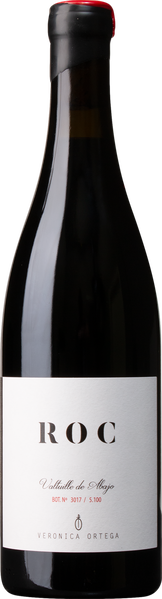
It’s not Tempranillo, it’s not Garnacha – it’s Mencía. And it might be the most interesting Spanish grape you’ve never heard of. Once thought to be a cousin of Cabernet Franc due to their many similarities, it is actually the offspring of two rare Portuguese grapes, and is making a comeback along Spain’s Atlantic coast.
Mencía is known for being fresh and medium-bodied, with an aromatic character, and for having a deep red colour in the glass. Its typical flavours sometimes overlap with medium-bodied wines from France, like Cabernet Franc or Pinot Noir. You can discover hints of pomegranate in its profile, along with cherry liqueur, liquorice, a strong earthy side, and hints of gravelly minerality.
In this article, we will explore the emergence of Mencía as a popular and refined wine in Spain, and recommend some wines for you to get a taste for this fascinating red grape.
What is Mencía? The Grape, its Emergence, and Styles

Mencía is indigenous to the western coast of the Iberian peninsula. It is grown most widely in the northwestern pocket of Spain that sits above Portugal – also known as Galicia. However, it is also grown in Portugal, where it is known variously as Jaen, Giao, or Loureiro Tinto.
Historically, Mencía was grown en masse and used to make inexpensive table wine, or used in field blends. In recent years, particularly in the Galician regions of Bierzo, Ribeira Sacra, and Valdeorras, Mencía has emerged as a single-varietal wine, evolving away from the use of heavy oaking and extraction towards elegant, terroir-driven cuvées.
This movement began in the 1990s, with entrepreneurial winemakers such as Fernando González, Pedro Rodríguez, and Alvaro Palacios (who also spearheaded the rejuvenation of the Priorat region in Catalonia). These pioneers discovered abandoned vineyards throughout the region, and experimented with Galicia’s high-altitude, windswept locations, planting them with old vines – this combination has proven to be an excellent basis for this new style of refined wines.
Another important figure in the revitalisation of Mencia is Luis Gutiérrez, a wine critic from Robert Parker’s Wine Advocate and co-founder of elmundovino.com, which features wine reviews entirely in Spanish. He has played such a large part in elevating the reputation of Mencia (and Spanish wine as a whole) that he was awarded the Spanish National Gastronomy Award for journalism, by Spain’s minister for tourism in 2012.
Today, Mencía wines continue to be developed and polished by legendary Spanish winemakers such as Raúl Pérez Pereira, and the younger generation, like Diego Magana, the founder of Dominio de Anza.
So what can you expect from a modern bottle of Mencía? We will dive into our recommendations next, but for people who love Pinot Noir and Cabernet Franc, it can be a refreshing alternative. It’s diverse, easy to pair with food, and always maintains a pleasant freshness due to its naturally high acidity.
Five Brilliant Mencía Wines to Discover
Wine number one is from the aforementioned Dominio de Anza, Finca El Rapolao. It is an extremely precise wine, sourced from a single 0.5-hectare plot in Bierzo, which contains small portions of the Alicante Bouschet and Sousón grapes. It strikes a perfect balance between delicacy and full-blooded red fruit character, with hints of iron and finely grained tannins.