The gentle rolling hills of Tuscany might not seem like the setting for a revolution. For centuries the rhythms and traditions of making wine here remained almost unchanged, cemented by medieval monastic orders and powerful noble families like the Medicis who established the region as an epicentre for fine wine production. Over time these traditions grew into a set of strict but stifling regulations designed to preserve the status quo.
Rebellion was already in the air on a global scale in the 1960s and 1970s when a new generation of pioneering winemakers tore up this rule book. Visionaries like Mario Incisa della Rocchetta and Piero Antinori were planting forbidden grape varieties and ageing their wines in imported French barrels rather than the traditional large oak casks. These maverick wines became known as the “Super Tuscans” to reflect this bold new style, quickly gaining a cult following especially amongst wine aficionados in the US.
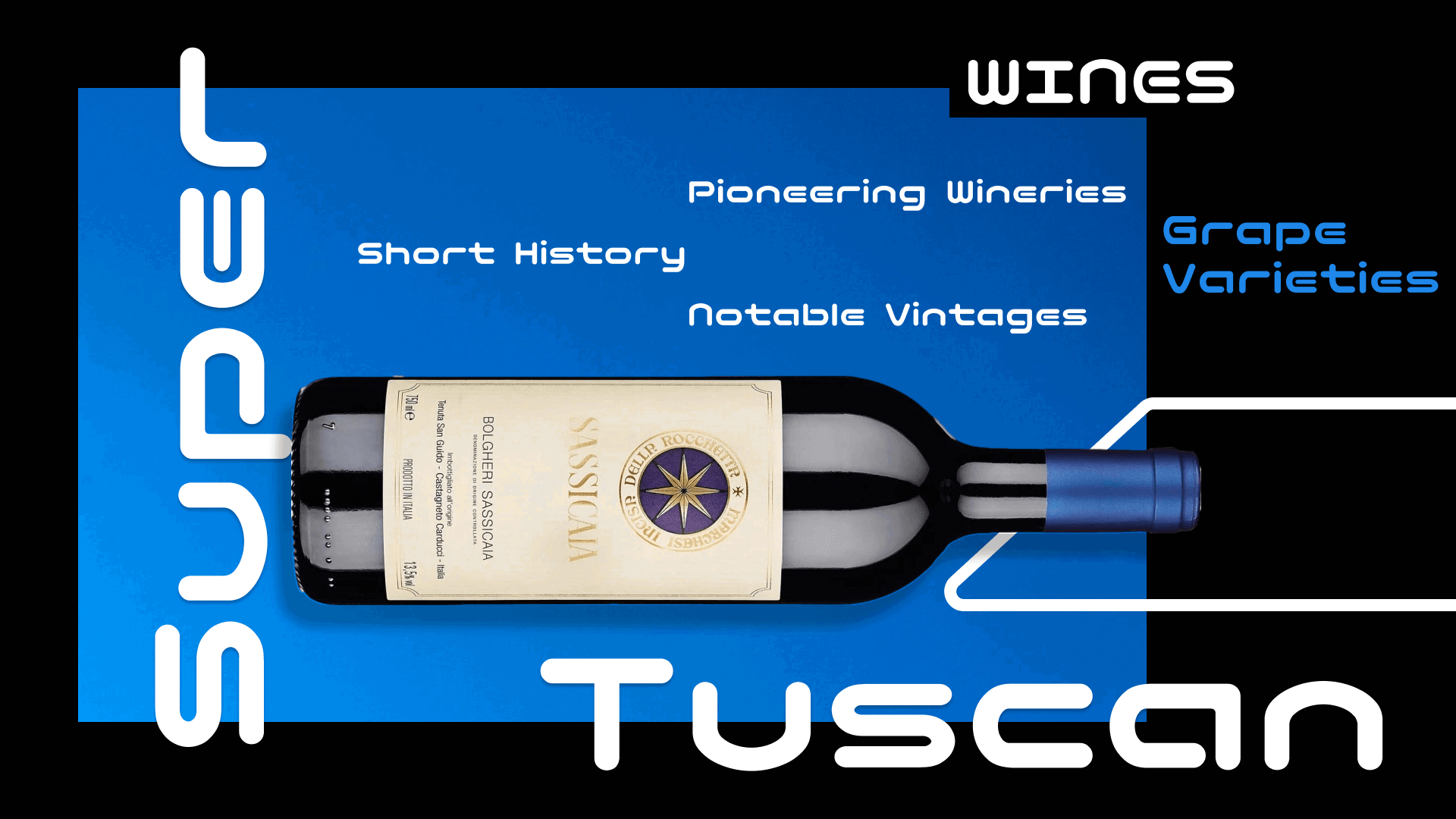
In this article we’ll take a closer look at Super Tuscan wines and how they transformed the Italian winemaking scene. We’ll examine the typical characteristics of these world-class wines and explore the region’s top producers like Tenuta San Guido, Marchesi Antinori, Tenuta dell’Ornellaia, and Castello di Ama.
A Short History of Super Tuscan Wines
The Italian Wine Classification System Prior to the 1970s
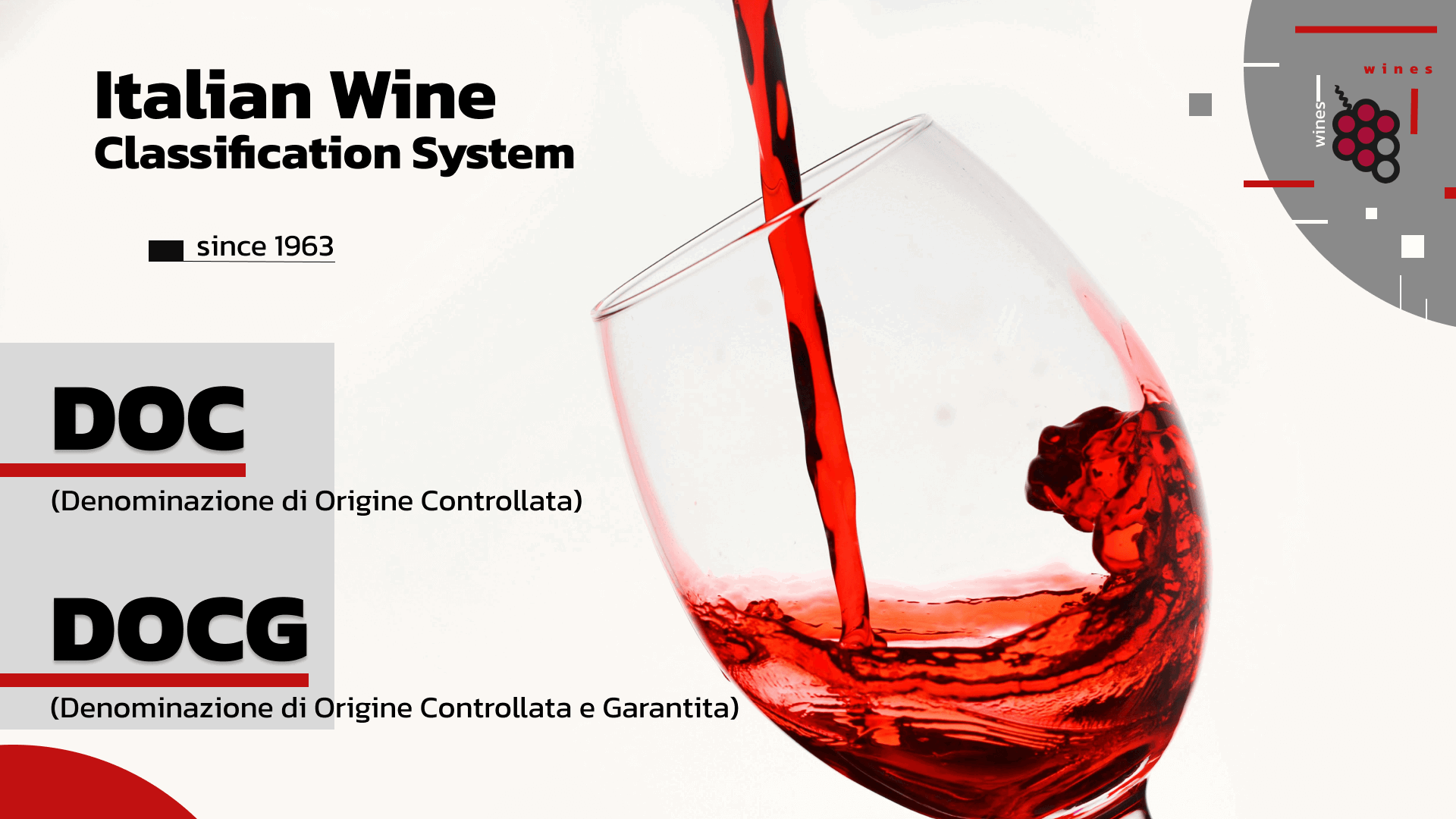
Before Super Tuscan wines burst onto the scene, Italy had a rigid set of regulations designed to uphold traditional methods and approaches to winemaking. In 1963 the country introduced their DOC (Denominazione di Origine Controllata) and DOCG (Denominazione di Origine Controllata e Garantita) labels modelled on the French system of Appellation d'Origine Contrôlée (AOC). Each DOC or DOCG has its own set of rules which had to be fulfilled in order to label wines under that name.
These regulations include stipulations about:
- Permitted grape varieties
- The proportions of grape varieties permitted in blends
- Ageing requirements indicating how long wines need to be matured for in the bottle or barrel
- Geographic boundaries of each DOCG or DOC
When these rules were introduced in Tuscany in 1963 they were heavily criticised for prioritizing traditions over wine quality. The stipulations for DOC Chianti at that time included:
- A specific blend of grape varieties including 50-80% Sangiovese, 10-30% Canaiolo, and mandatory use of 10-30% white grape varieties Trebbiano and Malvasia. This stipulation was designed to keep Chianti wines fresh and approachable. International grape varieties like Cabernet Sauvignon or Merlot were not permitted.
- Grapes had to be grown inside the Chianti Classico region or additional subregions like Chianti Colli Senesi and Chianti Rufina.
- The rules encouraged high volume production, permitting high yields of up to 80 quintals per hectare.
- Traditional Italian winemaking practices were also preferred. This included aging in large neutral Slavonian oak casks called “botti” rather than small French oak barrels.
The Emergence of Super Tuscan Wines
The DOC system was created to ensure local producers were making quality Chianti wines and keeping old traditions alive. Yet at the same time, these strict regulations stifled innovation and kept producers tied to outdated practices. For example, the requirement to include white grapes in the blend created lighter red wines which didn’t age as well.
Winemakers who went outside the system by using French grape varieties or ageing their wines in smaller oak barrels were forced to label their wines as “Vino da Tavola” (table wine) rather than under the more respected DOC system. High-quality wines that didn’t meet the DOC criteria received the same classification as inexpensive bulk wines.
It was these frustrations that gave birth to the Super Tuscan movement. Ambitious and forward-thinking winemakers like Mario Incisa della Rocchetta and Piero Antinori proved that world-class wines could be created outside the inflexible DOC system. These wines soon proved a hit with international wine journalists and consumers, earning the lofty title of “Super Tuscans”.
Pioneering Wineries and Wines
The Marchese Mario Incisa della Rocchetta was inspired by the powerful red wines of Bordeaux to plant Cabernet Sauvignon on his Tenuta San Guido estate in Bolgheri in the 1940s. This would later morph into Sassicaia, his Cabernet Sauvignon-dominant red blend, which was first released commercially in 1968.
Piero Antinori followed suit in 1971 with the first release of Tignanello. In defiance of the Chianti Classico rules he blended Sangiovese with Cabernet Sauvignon and Cabernet Franc, failing to include any white grapes in the final bottling.
Key Characteristics of Super Tuscan Wines
Grape Varieties and Blends
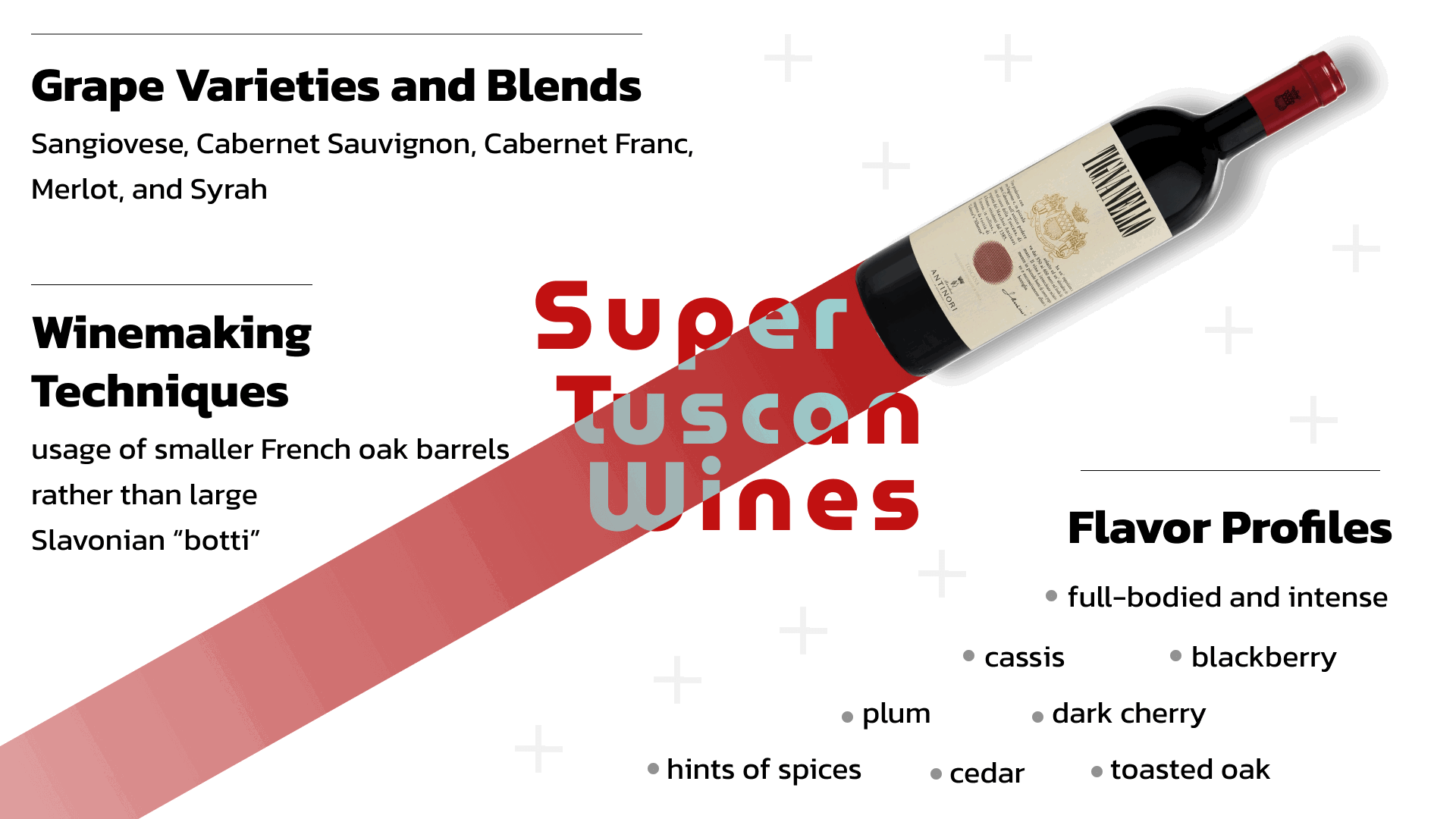
Super Tuscan wines may be single varietal, meaning they are made from just one grape variety, or they may be a blend of international grapes and local Italian grapes. The most common varieties used are Sangiovese, Cabernet Sauvignon, Cabernet Franc, Merlot, and Syrah.
Bordeaux-style blends like Sassicaia and Ornellaia which are made from Cabernet Sauvignon, Merlot, and Cabernet Franc. Another popular style is Sangiovese-dominant blends like Tignanello which include a small amount of Cabernet Sauvignon, Merlot, or Cabernet Franc, while Masseto is typically made with 100% Merlot.
Winemaking Techniques
Super Tuscan wines broke with Tuscan traditions by switching to the usage of smaller French oak barrels rather than large Slavonian oak barrels known as “botti”. Botti are largely neutral vessels which allow the character of the grapes to take centre stage. Inspired by the powerful red wines of Bordeaux, Super Tuscan producers wanted greater complexity, smoother tannins, and additional aromatics and flavours from the toasted oak itself.
These innovations aimed to produce high-quality wines that could compete with the finest French wines. Over the years Super Tuscan producers also introduced other modern techniques including temperature-controlled fermentation, micro-oxygenation, and cold maceration prior to fermentation.
Typical Super Tuscan Flavor Profiles and Aging Potential
Super Tuscan wines tend to be full-bodied and intense with plenty of rich ripe dark fruit layered on a long, lingering finish. There may be bold blackberry, cassis, dark cherry, and plum flavours, depending on the grape varieties used, combined with subtle hints of spices, cedar, toasted oak, and roasted nuts.
Many Super Tuscans are designed to develop further in the cellar, with top-end wines like Sassicaia and Ornellaia easily capable of ageing for decades. Over time their fruit flavours mellow and transform into tertiary notes of tobacco, leather, and dried fruit.
Notable Super Tuscan Wines and Producers
Sassicaia
Marchese Mario Incisa della Rocchetta is credited with creating one of the first Tuscan wines to fully embrace Bordeaux varietals. Today Sassicaia is regarded as the most iconic Super Tuscan wine with a cult following around the globe. It was even the first Italian wine to be awarded its own DOC Bolgheri Sassicaia classification in 1994.
Composed of Cabernet Sauvignon and Cabernet Franc, Sassicaia typically boasts a complex flavour profile featuring luscious dark fruit, hints of bitter herbs and mint, and notes of cigar box spice and woodsmoke from the ageing in French oak barrels. Over the years Sassicaia has earned a treasure trove of accolades, including numerous 100-point ratings from the legendary Robert Parker.
Recommended wine: Tenuta San Guido Sassicaia